Buy sledgeeishockey.eu ?
We are moving the project
sledgeeishockey.eu .
Are you interested in purchasing the domain
sledgeeishockey.eu ?
domain@kv-gmbh.de · 0541-91531010
Buy sledgeeishockey.eu ?
How do you store dry ice (carbon dioxide)?
Dry ice should be stored in an insulated container such as a cooler or a Styrofoam box. It should be kept in a well-ventilated area as carbon dioxide gas can accumulate and displace oxygen in poorly ventilated spaces. It is important to handle dry ice with gloves as it can cause frostbite on contact with skin. Additionally, make sure to never store dry ice in airtight containers as the buildup of carbon dioxide gas can cause the container to explode. **
Is carbon the same as carbon fiber?
No, carbon and carbon fiber are not the same. Carbon is a chemical element with the symbol C and atomic number 6, while carbon fiber is a material made of thin fibers composed mostly of carbon atoms. Carbon fiber is a lightweight and strong material commonly used in aerospace, automotive, and sporting goods industries, while carbon in its elemental form has various uses in different industries. **

Similar search terms for ISpring-FPC1000-Carbon-Block
Top-Angebote
Products related to ISpring-FPC1000-Carbon-Block:
-
iSpring FCB500 Carbon Block Filter for RO500 SystemDedicated last stage carbon block filter for iSpring RO500 tankless reverse osmosis system. Made with quality coconut shell activated carbon block. Further polishes filtered water and enhances the taste of water.49,99 $*Shipping: 0,00 $Secure redirect to the provider
-
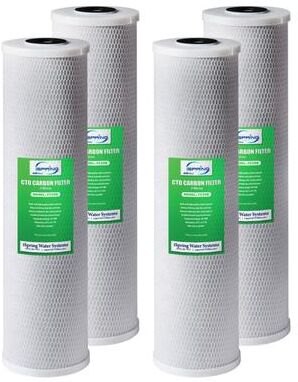
"iSpring FC25BX4 20"" CTO Carbon Block Filter Cartridges, 4-Pack"Protect Your Family and Household Appliance from Chlorine and More: Say goodbye to smelly, bad tasting water! The FC25B carbon block filter is specially designed to remove up to 99% of chlorine from water as well as taste and odor compounds.194,99 $*Shipping: 0,00 $Secure redirect to the provider


-
What are non-aromatic carbon-carbon bonds?
Non-aromatic carbon-carbon bonds are simply carbon-carbon bonds that do not participate in aromaticity. Aromaticity refers to a special type of bonding in organic molecules that results in increased stability and unique reactivity. Non-aromatic carbon-carbon bonds can be found in a wide range of organic compounds and can exhibit different types of reactivity and properties depending on their specific chemical environment. These bonds can be found in aliphatic hydrocarbons, such as alkanes and alkenes, as well as in many other organic molecules. **
-
Does the carbon dioxide remain in the ice cubes?
No, carbon dioxide does not remain in the ice cubes. When carbon dioxide is added to water and frozen into ice cubes, it will eventually escape into the air as a gas. This process is known as sublimation, where a substance transitions directly from a solid to a gas without passing through a liquid phase. **
-
Is carbon and carbon fiber the same thing?
No, carbon and carbon fiber are not the same thing. Carbon is a chemical element with the symbol C and atomic number 6, while carbon fiber is a material made of thin strands of carbon woven together. Carbon fiber is a composite material that is known for its high strength-to-weight ratio and is commonly used in aerospace, automotive, and sporting goods industries. **
-
I am looking for a carbon helmet with many mirrored visors.
I recommend checking out the Bell Star DLX MIPS helmet. It features a carbon shell for lightweight and durable protection, and it comes with a Transitions Adaptive Shield that automatically adjusts to changing light conditions. The shield has a mirrored finish for added style and glare reduction. This helmet offers both the carbon construction and multiple mirrored visor options that you are looking for. **


What is the difference between carbon monoxide and carbon dioxide?
Carbon monoxide (CO) is a colorless, odorless gas that is produced by incomplete combustion of carbon-containing fuels, while carbon dioxide (CO2) is a colorless gas that is naturally present in the Earth's atmosphere and is produced by the combustion of fossil fuels, as well as by natural processes like respiration and volcanic eruptions. The main difference between the two is their chemical composition - carbon monoxide contains one carbon atom and one oxygen atom, while carbon dioxide contains one carbon atom and two oxygen atoms. Additionally, carbon monoxide is highly toxic to humans, while carbon dioxide is not toxic at normal levels but can contribute to climate change when present in high concentrations. **
What are the differences between Carbon 12 and Carbon 14?
Carbon 12 and Carbon 14 are isotopes of carbon with different atomic masses. Carbon 12 has 6 protons and 6 neutrons, while Carbon 14 has 6 protons and 8 neutrons. Carbon 12 is stable and makes up the majority of carbon found in nature, while Carbon 14 is radioactive and is used in radiocarbon dating to determine the age of organic materials. The presence of Carbon 14 in an object can help scientists estimate its age up to around 50,000 years. **
Top-Angebote
Products related to ISpring-FPC1000-Carbon-Block:
-
iSpring FPC1000 Carbon Block Filter for RO1000 SystemA Specialized Last-Stage Carbon Block Filter for the iSpring RO1000 Tankless Reverse Osmosis System - Tool-Free Filter Replacement. Made with a premium coconut shell activated carbon block.62,49 $*Shipping: 0,00 $Secure redirect to the provider
-
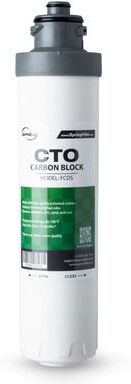
iSpring FCDS Carbon Block CTO Replacement FilterMOST IMPURITIES REDUCTION - By eliminating chlorine and other hazardous industrial pollutants from your house, our 3rd stage Carbon block filters provide you water without fear of contamination.34,99 $*Shipping: 0,00 $Secure redirect to the provider
-
iSpring FCB500 Carbon Block Filter for RO500 SystemDedicated last stage carbon block filter for iSpring RO500 tankless reverse osmosis system. Made with quality coconut shell activated carbon block. Further polishes filtered water and enhances the taste of water.49,99 $*Shipping: 0,00 $Secure redirect to the provider
-
How do you store dry ice (carbon dioxide)?
Dry ice should be stored in an insulated container such as a cooler or a Styrofoam box. It should be kept in a well-ventilated area as carbon dioxide gas can accumulate and displace oxygen in poorly ventilated spaces. It is important to handle dry ice with gloves as it can cause frostbite on contact with skin. Additionally, make sure to never store dry ice in airtight containers as the buildup of carbon dioxide gas can cause the container to explode. **
-
Is carbon the same as carbon fiber?
No, carbon and carbon fiber are not the same. Carbon is a chemical element with the symbol C and atomic number 6, while carbon fiber is a material made of thin fibers composed mostly of carbon atoms. Carbon fiber is a lightweight and strong material commonly used in aerospace, automotive, and sporting goods industries, while carbon in its elemental form has various uses in different industries. **
-
What are non-aromatic carbon-carbon bonds?
Non-aromatic carbon-carbon bonds are simply carbon-carbon bonds that do not participate in aromaticity. Aromaticity refers to a special type of bonding in organic molecules that results in increased stability and unique reactivity. Non-aromatic carbon-carbon bonds can be found in a wide range of organic compounds and can exhibit different types of reactivity and properties depending on their specific chemical environment. These bonds can be found in aliphatic hydrocarbons, such as alkanes and alkenes, as well as in many other organic molecules. **
-
Does the carbon dioxide remain in the ice cubes?
No, carbon dioxide does not remain in the ice cubes. When carbon dioxide is added to water and frozen into ice cubes, it will eventually escape into the air as a gas. This process is known as sublimation, where a substance transitions directly from a solid to a gas without passing through a liquid phase. **
Similar search terms for ISpring-FPC1000-Carbon-Block
-
"iSpring FC25BX4 20"" CTO Carbon Block Filter Cartridges, 4-Pack"Protect Your Family and Household Appliance from Chlorine and More: Say goodbye to smelly, bad tasting water! The FC25B carbon block filter is specially designed to remove up to 99% of chlorine from water as well as taste and odor compounds.194,99 $*Shipping: 0,00 $Secure redirect to the provider
-
iSpring FC15BX4 5 Micron Carbon Block Filter Cartridges, 4-Pack"Using quality coconut shell carbon and highly compact fabrication tech, this activated carbon block CTO(Chlorine, Taste, and Odor) filter cartridge is designed and produced to achieve filtration efficiency and long filter life for 10"" Whole House and…"149,99 $*Shipping: 0,00 $Secure redirect to the provider
-
iSpring CKC2 2-Stage Countertop Water Filtration Dispenser System- Includes Activated Carbon and Carbon Block FiltersProduces great tasting drinking water filtered right from your kitchen tap; Effectively reduces sediment, chlorine, and more by letting water pass through the countertop water filter No hassle faucet adapter makes installation and removal a breeze;…69,99 $*Shipping: 0,00 $Secure redirect to the provider
-
Is carbon and carbon fiber the same thing?
No, carbon and carbon fiber are not the same thing. Carbon is a chemical element with the symbol C and atomic number 6, while carbon fiber is a material made of thin strands of carbon woven together. Carbon fiber is a composite material that is known for its high strength-to-weight ratio and is commonly used in aerospace, automotive, and sporting goods industries. **
-
I am looking for a carbon helmet with many mirrored visors.
I recommend checking out the Bell Star DLX MIPS helmet. It features a carbon shell for lightweight and durable protection, and it comes with a Transitions Adaptive Shield that automatically adjusts to changing light conditions. The shield has a mirrored finish for added style and glare reduction. This helmet offers both the carbon construction and multiple mirrored visor options that you are looking for. **
-
What is the difference between carbon monoxide and carbon dioxide?
Carbon monoxide (CO) is a colorless, odorless gas that is produced by incomplete combustion of carbon-containing fuels, while carbon dioxide (CO2) is a colorless gas that is naturally present in the Earth's atmosphere and is produced by the combustion of fossil fuels, as well as by natural processes like respiration and volcanic eruptions. The main difference between the two is their chemical composition - carbon monoxide contains one carbon atom and one oxygen atom, while carbon dioxide contains one carbon atom and two oxygen atoms. Additionally, carbon monoxide is highly toxic to humans, while carbon dioxide is not toxic at normal levels but can contribute to climate change when present in high concentrations. **
-
What are the differences between Carbon 12 and Carbon 14?
Carbon 12 and Carbon 14 are isotopes of carbon with different atomic masses. Carbon 12 has 6 protons and 6 neutrons, while Carbon 14 has 6 protons and 8 neutrons. Carbon 12 is stable and makes up the majority of carbon found in nature, while Carbon 14 is radioactive and is used in radiocarbon dating to determine the age of organic materials. The presence of Carbon 14 in an object can help scientists estimate its age up to around 50,000 years. **
* All prices are inclusive of VAT and, if applicable, plus shipping costs. The offer information is based on the details provided by the respective shop and is updated through automated processes. Real-time updates do not occur, so deviations can occur in individual cases. ** Note: Parts of this content were created by AI.