Buy sledgeeishockey.eu ?
We are moving the project
sledgeeishockey.eu .
Are you interested in purchasing the domain
sledgeeishockey.eu ?
domain@kv-gmbh.de · 0541-91531010
Buy sledgeeishockey.eu ?
How do you round recurring decimals?
To round recurring decimals, you can either stop at a certain point or use a bar notation to indicate the repeating pattern. For example, if you have the decimal 0.3333..., you can round it to 0.33 or 0.34 depending on the desired level of precision. If the recurring decimal is a longer pattern, you can round it by looking at the digit that follows the repeating pattern. **
How do you round decimals in math?
To round decimals in math, you first determine the place value you want to round to (e.g., tenths, hundredths). Then, look at the digit to the right of the desired place value. If that digit is 5 or greater, you round up the desired place value. If it is less than 5, you leave the desired place value as it is. Finally, adjust any digits to the right of the desired place value to zero. **

Similar search terms for Decimals
Top-Angebote
Products related to Decimals:
-
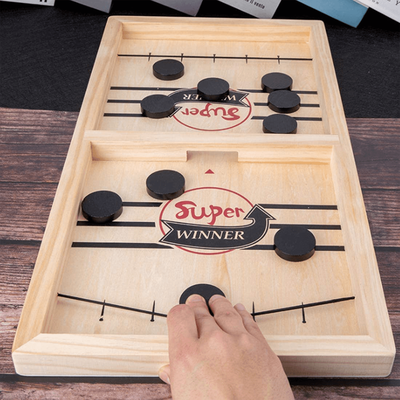
Playful Picks Wooden Slingshot Puck Game For Kids & Adults Wooden Slingshot Puck Game For Kids & AdultsPlaying for some time refreshes your mind to help you perfectly perform your daily routines. So you must spend some time in playing daily. But how By getting your hands on this Wooden Slingshot Puck Game For Kids & Adults. So play this game and stay...29,97 $*Shipping: 0,00 $Secure redirect to the provider


-
How do I create recurring decimals in Word?
To create recurring decimals in Word, you can use the Equation Editor feature. First, go to the Insert tab and click on Equation in the Symbols group. Then, select the Fraction structure and enter the non-recurring part of the decimal in the numerator and the recurring part in the denominator. Finally, highlight the recurring part and go to the Equation Tools Design tab, click on the More button in the Structures group, and select Overbar to create the repeating decimal. **
-
How do you approximate recurring decimals as fractions?
To approximate recurring decimals as fractions, you can use the concept of geometric series. For example, to convert 0.333... to a fraction, you can represent it as 0.333... = 3/10 + 3/100 + 3/1000 + ... = 3/10(1 + 1/10 + 1/100 + ...). Using the formula for the sum of an infinite geometric series, you can simplify this expression to get 1/3. This process can be applied to other recurring decimals as well to approximate them as fractions. **
-
What is the difference between terminating and repeating decimals?
Terminating decimals are decimals that have a finite number of digits after the decimal point, such as 0.75 or 3.25. On the other hand, repeating decimals are decimals that have a pattern of digits that repeat indefinitely, such as 0.3333... or 0.454545... Terminating decimals can be expressed as a fraction, while repeating decimals can also be expressed as a fraction using a bar notation to indicate the repeating pattern. **
-
How does the conversion of areas with decimals work?
The conversion of areas with decimals involves converting the decimal to the appropriate unit of measurement. For example, if you have an area of 3.5 square meters and you want to convert it to square centimeters, you would multiply 3.5 by 10,000 (since there are 10,000 square centimeters in a square meter) to get 35,000 square centimeters. Similarly, if you want to convert 4.75 square feet to square inches, you would multiply 4.75 by 144 (since there are 144 square inches in a square foot) to get 684 square inches. The key is to know the conversion factor between the two units and use it to perform the conversion. **

Can you help me with recurring decimals in math?
Yes, I can help you with recurring decimals in math. Recurring decimals are numbers that repeat indefinitely, such as 0.3333... or 0.7272... To convert a recurring decimal into a fraction, you can use algebraic manipulation to solve for the repeating portion of the decimal and then express it as a fraction. I can guide you through the steps to convert recurring decimals into fractions and help you understand the concept better. **
How do I calculate the average using written division with decimals?
To calculate the average using written division with decimals, you first add up all the numbers you want to find the average of. Then, you divide the sum by the total number of values. For example, if you want to find the average of 3.5, 4.2, and 2.8, you would add them together (3.5 + 4.2 + 2.8 = 10.5) and then divide by 3 (since there are 3 values), giving you an average of 3.5. **
Top-Angebote
Products related to Decimals:
-
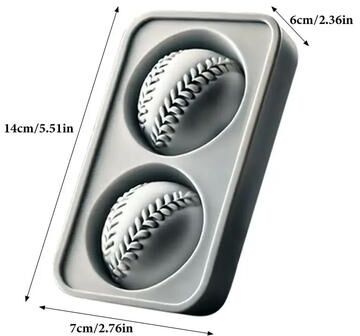
Inspired Living Hockey & Baseball Silicone Ice Mold Set For Cocktails Hockey Puck Ice Mold + Baseball Ice Cube Tray 2 GridsMake every sip feel like an occasion. This hockey puck ice mold and baseball set creates bold, slowmelting ice shapes that instantly upgrade whiskey, iced coffee, or party drinks. Designed for sports fans, home bartenders, and hosts who love...54,97 $*Shipping: 0,00 $Secure redirect to the provider
-
Sage The Puck SuckerSage The Puck Sucker is a no knock, no fuss and no mess solution for cleaning your used coffee grounds from your porta filter. Compatible with 58mm porta filters, the automatic suction cup creates a rapid vacuum, this quietly releases the used espresso coffee puck from the porta filter in one swift action. The puck sucker has a quick release lid which allows the disposal of the coffee waste quickly and easily. The tritan container is dishwasher safe for easy and convenient cleaning. The Puck Sucker has non-slip rubber feet for stability and safety when in use. Complete with a 9V battery.79,95 £*Shipping: 0,00 £Secure redirect to the provider
-
Playful Picks Wooden Slingshot Puck Game For Kids & Adults Wooden Slingshot Puck Game For Kids & AdultsPlaying for some time refreshes your mind to help you perfectly perform your daily routines. So you must spend some time in playing daily. But how By getting your hands on this Wooden Slingshot Puck Game For Kids & Adults. So play this game and stay...29,97 $*Shipping: 0,00 $Secure redirect to the provider
-
How do you round recurring decimals?
To round recurring decimals, you can either stop at a certain point or use a bar notation to indicate the repeating pattern. For example, if you have the decimal 0.3333..., you can round it to 0.33 or 0.34 depending on the desired level of precision. If the recurring decimal is a longer pattern, you can round it by looking at the digit that follows the repeating pattern. **
-
How do you round decimals in math?
To round decimals in math, you first determine the place value you want to round to (e.g., tenths, hundredths). Then, look at the digit to the right of the desired place value. If that digit is 5 or greater, you round up the desired place value. If it is less than 5, you leave the desired place value as it is. Finally, adjust any digits to the right of the desired place value to zero. **
-
How do I create recurring decimals in Word?
To create recurring decimals in Word, you can use the Equation Editor feature. First, go to the Insert tab and click on Equation in the Symbols group. Then, select the Fraction structure and enter the non-recurring part of the decimal in the numerator and the recurring part in the denominator. Finally, highlight the recurring part and go to the Equation Tools Design tab, click on the More button in the Structures group, and select Overbar to create the repeating decimal. **
-
How do you approximate recurring decimals as fractions?
To approximate recurring decimals as fractions, you can use the concept of geometric series. For example, to convert 0.333... to a fraction, you can represent it as 0.333... = 3/10 + 3/100 + 3/1000 + ... = 3/10(1 + 1/10 + 1/100 + ...). Using the formula for the sum of an infinite geometric series, you can simplify this expression to get 1/3. This process can be applied to other recurring decimals as well to approximate them as fractions. **
Similar search terms for Decimals
-
Inspired Living Hockey & Baseball Silicone Ice Mold Set For Cocktails Hockey Puck Ice Mold + Baseball Ice Cube Tray 4 GridsMake every sip feel like an occasion. This hockey puck ice mold and baseball set creates bold, slowmelting ice shapes that instantly upgrade whiskey, iced coffee, or party drinks. Designed for sports fans, home bartenders, and hosts who love...54,97 $*Shipping: 0,00 $Secure redirect to the provider
-
What is the difference between terminating and repeating decimals?
Terminating decimals are decimals that have a finite number of digits after the decimal point, such as 0.75 or 3.25. On the other hand, repeating decimals are decimals that have a pattern of digits that repeat indefinitely, such as 0.3333... or 0.454545... Terminating decimals can be expressed as a fraction, while repeating decimals can also be expressed as a fraction using a bar notation to indicate the repeating pattern. **
-
How does the conversion of areas with decimals work?
The conversion of areas with decimals involves converting the decimal to the appropriate unit of measurement. For example, if you have an area of 3.5 square meters and you want to convert it to square centimeters, you would multiply 3.5 by 10,000 (since there are 10,000 square centimeters in a square meter) to get 35,000 square centimeters. Similarly, if you want to convert 4.75 square feet to square inches, you would multiply 4.75 by 144 (since there are 144 square inches in a square foot) to get 684 square inches. The key is to know the conversion factor between the two units and use it to perform the conversion. **
-
Can you help me with recurring decimals in math?
Yes, I can help you with recurring decimals in math. Recurring decimals are numbers that repeat indefinitely, such as 0.3333... or 0.7272... To convert a recurring decimal into a fraction, you can use algebraic manipulation to solve for the repeating portion of the decimal and then express it as a fraction. I can guide you through the steps to convert recurring decimals into fractions and help you understand the concept better. **
-
How do I calculate the average using written division with decimals?
To calculate the average using written division with decimals, you first add up all the numbers you want to find the average of. Then, you divide the sum by the total number of values. For example, if you want to find the average of 3.5, 4.2, and 2.8, you would add them together (3.5 + 4.2 + 2.8 = 10.5) and then divide by 3 (since there are 3 values), giving you an average of 3.5. **
* All prices are inclusive of VAT and, if applicable, plus shipping costs. The offer information is based on the details provided by the respective shop and is updated through automated processes. Real-time updates do not occur, so deviations can occur in individual cases. ** Note: Parts of this content were created by AI.